
Shopping is transactional. Acquiring is biographical.
The woman who shops returns from the mall with a bag. The woman who acquires returns from Essaouira with an embroidered blouse and a sentence attached to it — a sentence she will tell you, unprompted, because the sentence is the point. The object is evidence. Evidence of a life lived with intention, in places most people don’t go, with a sensitivity to beauty that predates Instagram and will outlast it.
The High Couture does not shop. She acquires. The Heiress has been studying the distinction for some time.
The Tribe
Carole Radziwill arrived on Real Housewives of New York already fully formed — a journalist, a widow of a Kennedy cousin, a woman who had lived in places that changed her and brought back objects as proof. Her Tribeca loft was not decorated. It was assembled. The distinction is everything.
Dina Manzo made the quietest exit from New Jersey money — retreating from the franchise into crystals, meaningful objects, and a home that looked less like an interior design project and more like a carefully curated soul. The Heiress respects a woman who knows when to leave.
Adriana de Moura speaks four languages. She has opinions about galleries and the correct way to layer turquoise. She is Brazilian art-world bohemian royalty and she arrived on Miami’s franchise already knowing things the other women were still learning.
Three different women. One shared frequency: the conviction that provenance matters more than price, and that every piece in your possession should have a sentence attached to it.
The Wardrobe, Forensically
The High Couture wardrobe is not bohemian in the festival sense. Festival bohemian is a costume. The High Couture’s wardrobe is a record.
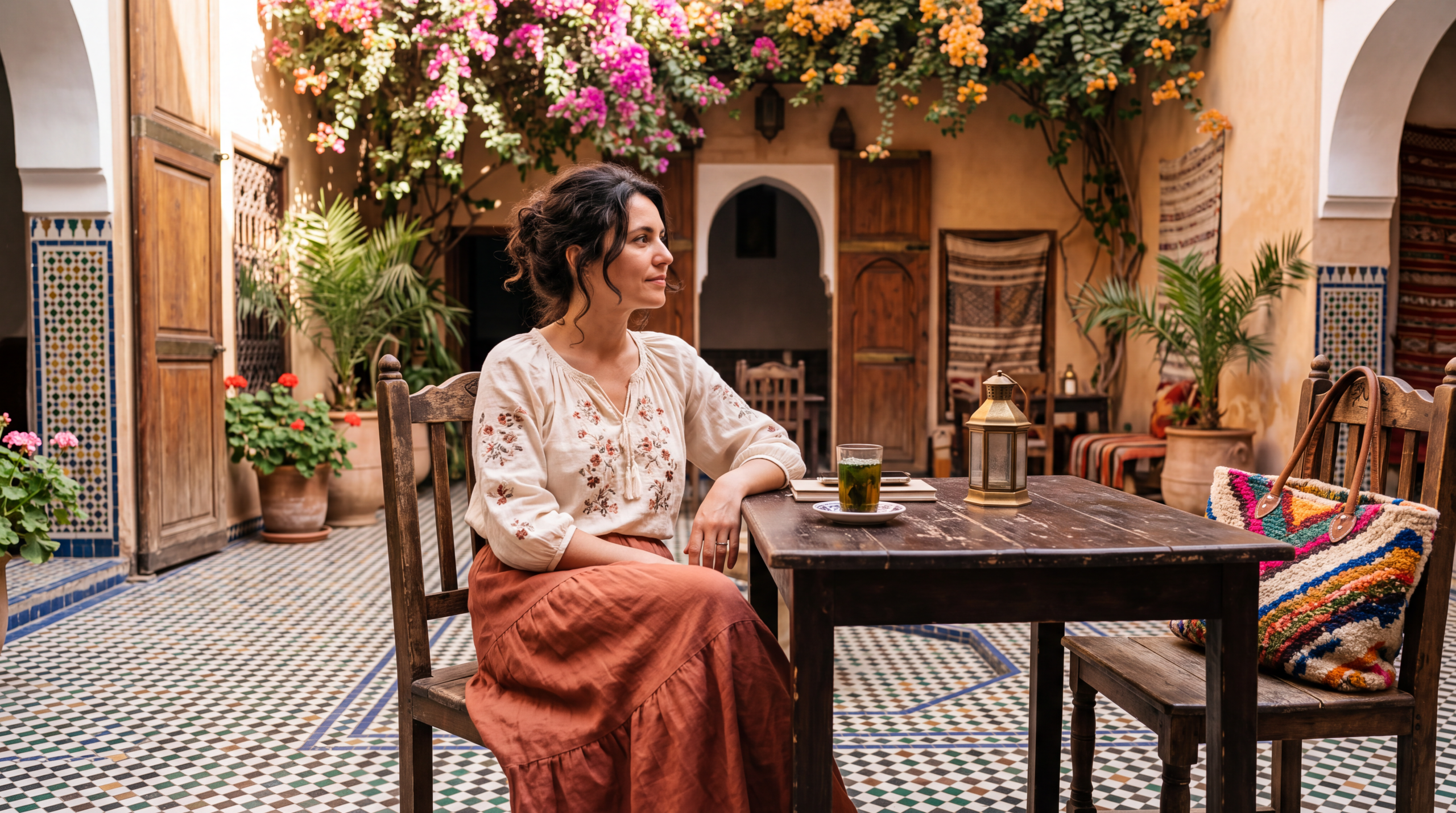
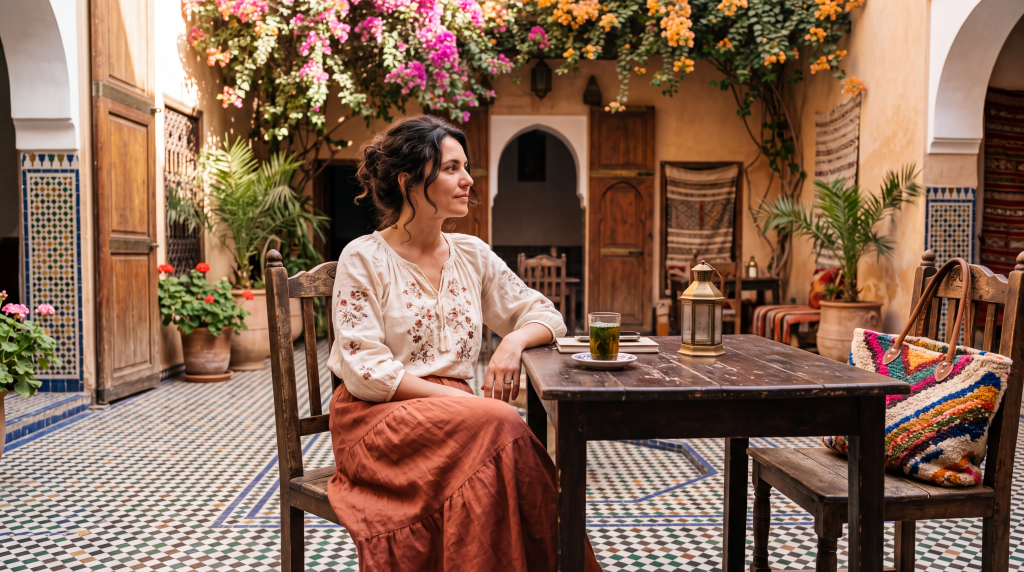
The embroidered cream peasant blouse: artisan-made, purchased from a specific person at a specific market, not available on any website. This is the founding document. If she is wearing a blouse that came from a shop on the high street, she is not yet a High Couture — she is a woman in the process of becoming one.
The tiered terracotta maxi skirt: cotton or linen, full volume, worn with everything including boots in November and flat sandals in June. Isabel Marant produces the definitive version. Mes Demoiselles Paris produces a version with slightly more poetry in the construction.
The turquoise stack: not purchased at once. Accumulated. Marrakech contributed the ring. Oaxaca contributed the cuff. Istanbul contributed the pendant. The stack is a timeline, not a set.
The flat sandal: Ancient Greek Sandals, in tan or cognac, worn until they have been resoled twice. The High Couture does not buy new sandals when her old ones still have years in them. This is both an ethical position and an aesthetic one.
The woven bag: acquired at a market. Not a boutique. A market. The specific market is remembered. The specific artisan is, ideally, remembered too.
The Ward
The High Couture home is an archive of everywhere she has been. The rug: Moroccan, from a souk she navigated without a guide. The ceramics: Turkish, wrapped in her embroidered blouses for the flight home. The art: acquired from someone she met, not from a gallery with a mailing list.
The anchor object is always a textile — a kilim, a vintage suzani, a hand-block-printed linen throw. It does not match. It coheres. These are different things.
Browse the High Couture home edit →
The Where
Marrakech. Oaxaca. Istanbul. Ubud. Cartagena. The High Couture’s travel destinations share one quality: she returns to them. Not because TripAdvisor recommends it, but because a place that changed her once is capable of changing her again.
She stays in a riad, not a hotel. She finds a restaurant by following someone who looked like they knew where they were going. She buys things she cannot ship and finds a way to ship them.
The High Couture travel edit →
If this is the frequency you’re operating on, the quiz will confirm it: wifelife.vip/quiz.
— The Heiress